
PRECISION Voices: Children, Communication and Digital Safety
15th – 16th October 2026
Keynote speakers
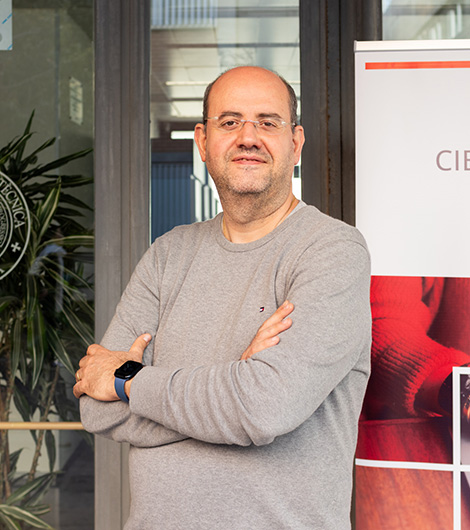
Prof. Santiago Escobar Román
Full Professor of Computer Sciences and Cyber-Security Expert, Universitat Politècnica de València (Spain)
Bio
Santiago Escobar has been a Full Professor at the Universitat Politècnica de València since 2023. He obtained his PhD in Computer Science from the same university in 2003.
He has been awarded four five-year research periods and four six-year research evaluations (with the most recent still active). He has supervised five completed PhD theses and is currently supervising three more, as well as over 50 undergraduate and master’s dissertations. He has published more than 100 journal articles and conference papers and has served on over 50 scientific committees for conferences, acting as chair of the scientific committee on more than 10 occasions. He has delivered over 50 invited talks at research centres, conferences, and international schools. He has undertaken several research stays in Europe, Japan, and the United States, some lasting up to six months. He has also been principal investigator on regional, national, and international projects, including those funded by the European Union, the US Air Force, and NATO.
Keynote title
TBA
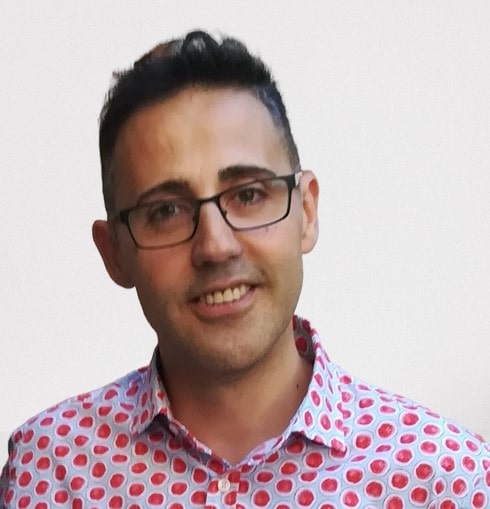
Prof. Antonio García-Gómez
Full Professor of Linguistics, Universidad de Alcalá (Spain)
Bio
Antonio García-Gómez is a Full Professor of English Philology at the Universidad de Alcalá (UAH), specialising in discourse analysis and discursive psychology. His research focuses on gendered and sexualised communication in digital and youth contexts, with a particular interest in conflict talk, relational aggression, and identity construction in new media environments. His scholarly work has made significant contributions to the study of gender, aggression, and adolescent digital cultures. In particular, he has examined relational and cyber-aggression among teenagers, exploring how gender shapes hostile interactions and social positioning online. He has also analysed masculine identities, feminine devaluation, and femmephobia in digital environments, as well as gendered violence and aggression in social media discourse. His research extends to youth practices such as sexting and online identity negotiation, highlighting how gendered norms influence teenage communication and behaviour.
Keynote title
From Swipes to Offline Realities: Gendered Discourses, Risky Scripts, and Sexual Health in Teen Dating Apps

Katariina Leivo
Senior Specialist at Protect Children (Finland)
Bio
Katariina Leivo works as a senior specialist at Protect Children and as a trauma-focused CBT-therapist treating children and young people affected by sexual violence including CSAM crimes.
Katariina worked for 17 years in London in a multicultural environment, promoting the well-being and recovery of vulnerable children and families. In recent years she has focused on protecting children from childhood sexual violence and supporting victims and their families of such crimes.
Katariina actively contributes to various governmental and international expert working groups, leveraging her extensive clinical expertise in supporting victims/survivors of sexual violence and their families. She regularly speaks at international events, conferences, and panels, sharing her expertise and advocating meaningful change to advance children’s rights on a global scale.
About Protect Children
Protect Children is a Helsinki-based non-profit organisation driven by the mission to create a world free from child sexual abuse and exploitation. Its work is guided by four core themes and underpinned by research. The organisation focuses on preventing harm before it occurs, supporting victims and survivors, and advocating for stronger child protection measures. It empowers children, families, and communities with knowledge to stay safe, while promoting legislative and systemic change. Through evidence-based action and advocacy, Protect Children works to build a safer world where every child is protected from sexual violence.
Keynote title
“No one ever actually touched me but I still felt violated” – Comparing the Long-Term Impacts of Online and Offline Child Sexual Abuse

Dr. Agustín Reyes Torres
Associated Professor of Education and Teacher Training, Universitat de València (Spain)
Bio
Agustín Reyes Torres is an Associate Professor in the Department of Language and Literature Education at the Universitat de València. He has taught a wide range of courses and undertaken research stays at the University of Virginia, Boston College, Middlebury College, and Columbia University. His current research focuses on promoting multiliteracies through multimodal resources, the teaching of additional languages, and the education of future teachers.
He has published articles in national and international journals on multicultural and postcolonial literature, as well as on language pedagogy and the use of multimodal resources in the foreign language classroom. He is co-author of the books AI-Supported Teaching for Multilingual Learners: A Multimodal Approach to Literacies (Teachers College Press, 2026), Multiliteracies, Multimodality and Learning by Design in Second Language Learning and Teacher Education (Routledge, 2025), and Didáctica del español como 2/L en el siglo XXI (ArcoLibros, 2021).
Keynote title
Reading and Learning in the Digital Era: When Teacher Training Is Also Prevention
In today’s digital society, texts are no longer just words. Images, sounds, emojis, and messages designed to generate trust frequently shape the everyday communicative landscape of childhood. Within this same context operates online sexual violence against children and adolescents, a growing phenomenon that exploits minors’ inability to critically interpret the digital discourses surrounding them.
From a socioconstructivist and multimodal pedagogical perspective, this talk proposes understanding the prevention of online child sexual abuse as a major educational challenge. Reading and learning, in a broad sense, are active processes of meaning-making, and it is precisely this critical capacity that can protect minors in digital environments.
However, this capacity does not develop on its own. It requires teachers who are trained to analyse multimodal discourses, to address socio-affective communication in the classroom, and to build trusting relationships that enable children to break their silence when they are harassed. Teacher education is therefore not a preliminary step to prevention; it is prevention itself. In this way, training teachers who can interpret the digital world must be a priority today in order to protect children.